 All News
From Cyber Valley to Europe's AI frontier
Ontic Labs and Feyer selected for SPRIND's Next Frontier AI Challenge
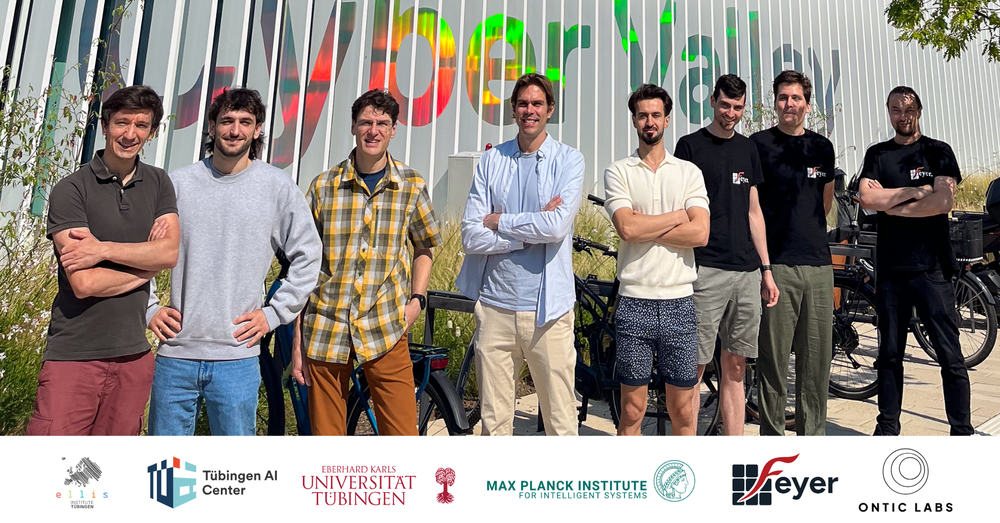
Ontic Labs and Feyer have been selected for the first stage of the German Federal Agency for Breakthrough Innovation’s (SPRIND) Next Frontier AI Challenge. The two start-ups are among just ten teams across Europe that have been selected and will receive €3 million to develop technologies beyond today's AI models.
Of the three selected teams from Germany, two originate from the Cyber Valley ecosystem in Baden-Württemberg as spin-outs from several of Cyber Valley's academic partners, including the ELLIS Institute Tübingen, Max Planck Institute for Intelligent Systems, Tübingen AI Center, and the University of Tübingen. Their success highlights the growing momentum with which AI research is being translated into innovative companies and how excellent AI research from Baden-Württemberg is playing a key role in the European race for frontier AI models.
The Next Frontier AI Challenge is aimed at European teams developing fundamental AI technologies with exceptionally high innovation potential. The goal is to promote new approaches that go beyond the current state of the art and can have a long-term economic and societal impact.
“Ontic Labs and Feyer are excellent examples of what the Cyber Valley ecosystem is designed to achieve: turning outstanding research into technologies with societal and economic relevance,” said Florian K. Mayer, Managing Director of Cyber Valley GmbH. “Their success reflects the strength of the innovation pipeline in Baden-Württemberg, where leading researchers, entrepreneurs, and partners work together to transform scientific advances into new ventures and applications.”
Ontic Labs: Building AI for Physical Intelligence
Ontic Labs is developing a foundation model for physical intelligence. The company aims to enable machines to understand the physical dynamics of their environment rather than only recognizing visual patterns. This could allow robots to predict future states, reason about physical interactions, and operate more effectively in complex real-world settings.
The company brings together researchers from the Max Planck Institute for Intelligent Systems, the University of Tübingen’s Cluster of Excellence Machine Learning: New Perspectives for Science, the Tübingen AI Center, and the ELLIS Institute Tübingen. Ontic Labs was founded by Omid Taheri, Mikel Zhobro, Wieland Brendel, Georg Martius, and Gerard Pons-Moll.
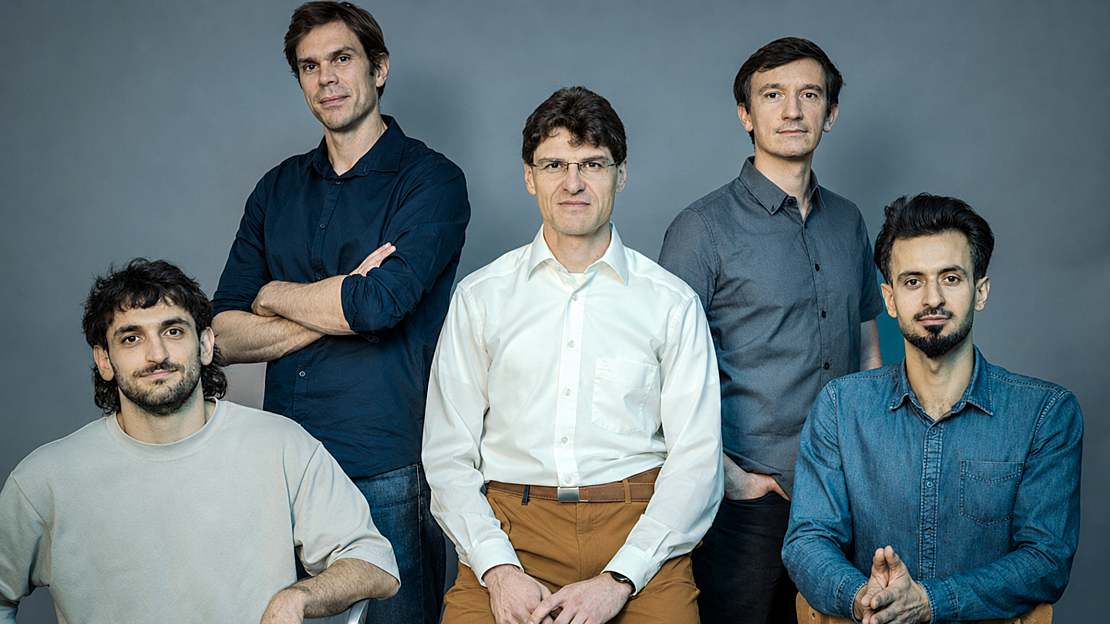 Ontic Labs team. Photo: SPRIND
Feyer: AI for Industrial Hardware Innovation
Feyer develops AI systems that autonomously design new industrial hardware. Its approach combines modern AI methods with physics-based simulations to generate and evaluate technical solutions. By applying AI-driven invention to industrial challenges, Feyer aims to accelerate the development of new technologies across fields including photonics, quantum technologies, microscopy, semiconductor manufacturing, and energy systems.
The company emerged from the research group of Mario Krenn, Professor at the Cluster of Excellence Machine Learning: New Perspectives for Science at the University of Tübingen. The founding team consists of Jonathan Klimesch, Sören Arlt, and Mario Krenn.
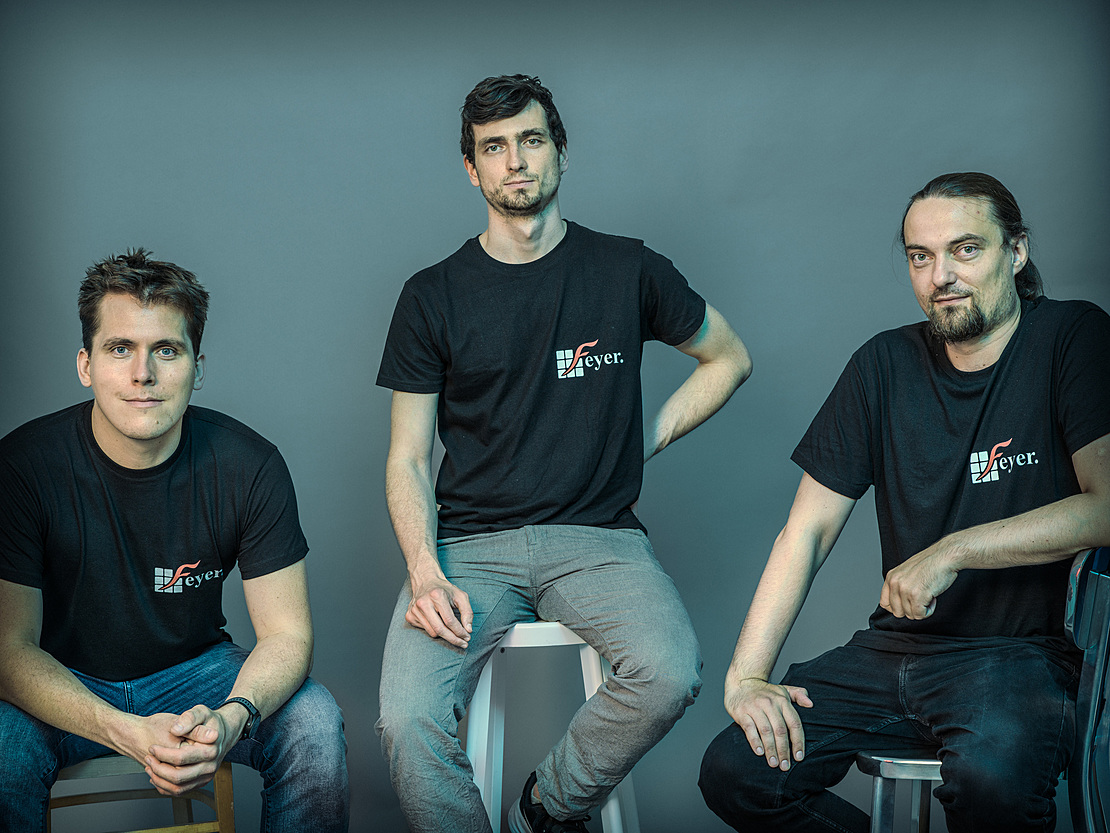 Feyer team. Photo: SPRIND
The selection of Ontic Labs and Feyer reflects the strength of the Cyber Valley ecosystem, which connects leading AI research with entrepreneurship and start-up support. Both companies build on research conducted at institutions that are central to Baden-Württemberg’s AI landscape and demonstrate how advances in AI research are being translated into to real-world impact, powering industry, and driving Europe’s sustainable future.
Read SPRIND’s press release here.
Read the press release from the University of Tübingen (in German) here.




Related Articles

Success stories from the Cyber Valley Innovation Campus: ...



2023: Three new AI institutes at Cyber Valley